

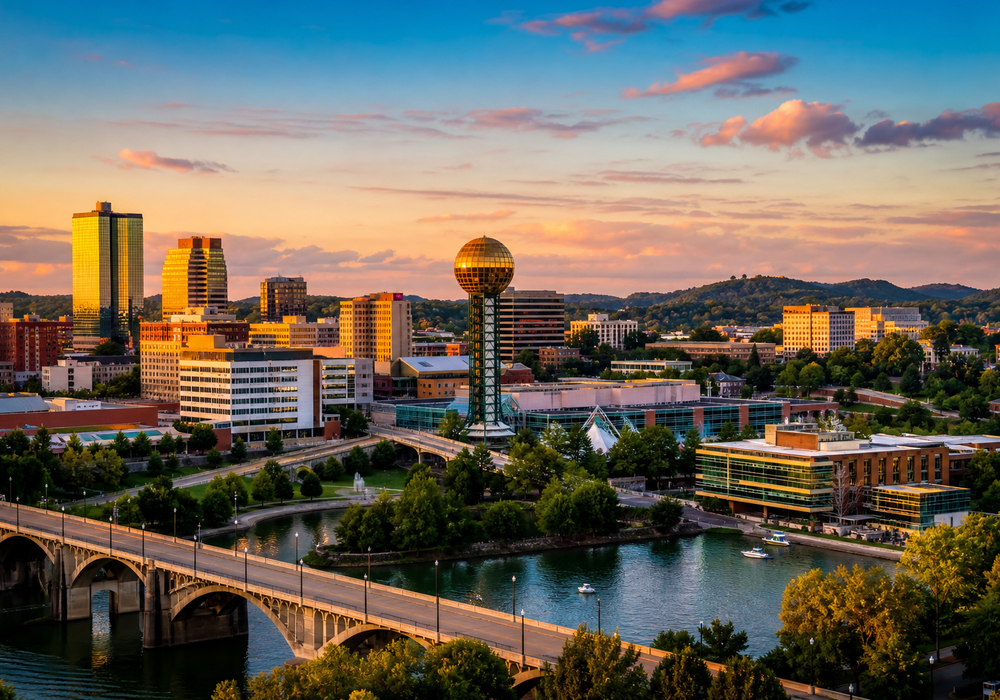
Knoxville, Tennessee keeps showing up on "best places to live" lists, and the people who've moved here will tell you the lists aren't wrong. But if you're seriously considering making Knoxville your home, you deserve more than a listicle. Here's an honest look at what living in Knoxville is actually like in 2026 — the good, the things to think about, and why thousands of people are choosing East Tennessee every year.
The Cost of Living Is Genuinely Reasonable
Knoxville's cost of living sits below the national average, and by a meaningful margin compared to cities like Atlanta, Charlotte, or Nashville. The most significant factor is housing — while prices have risen, homes for sale in Knoxville TN remain far more accessible than comparable mid-sized cities. You can still find quality homes in good neighborhoods in the $300,000s, and entry-level buyers have options in the $200,000s. Beyond housing, groceries, utilities, and everyday expenses track at or below the national average.
Tennessee also has no state income tax on wages or salaries. For someone relocating from Illinois, California, or New York, this is an immediate and real financial benefit. What you earn goes further here.
The Outdoor Access Is Exceptional
Knoxville sits at the foot of the Great Smoky Mountains — the most visited national park in the country. Within an hour's drive you have world-class hiking, fishing, whitewater rafting, skiing at Ober Mountain, and the charm of towns like Gatlinburg and Townsend. Within the city itself, the Urban Wilderness trail system offers over 50 miles of trails. The Tennessee River runs through downtown. Lake access on Fort Loudoun and Norris Lake is within 30–45 minutes.
If outdoor recreation is a priority for you, Knoxville's location is hard to beat east of the Mississippi.
The Economy Is Stable and Diverse
Knoxville's economy doesn't depend on a single industry — which is a genuine strength. The University of Tennessee is the largest employer in the metro area. The Tennessee Valley Authority (TVA) is headquartered here. Oak Ridge National Laboratory, one of the nation's premier research facilities, is 25 miles away in Oak Ridge. University of Tennessee Medical Center anchors the healthcare sector. Pilot Flying J, one of the nation's largest private companies, is headquartered in Knoxville.
This diversity — university, federal energy and research, healthcare, logistics, and a growing tech and professional services sector — creates economic resilience. Knoxville was less severely impacted by economic downturns than many markets, and the combination of UT's enrollment growth and ongoing in-migration continues to drive demand.
The Neighborhoods Offer Real Variety
Knoxville's neighborhoods run from historic to brand new, urban to suburban, affordable to upscale. Sequoyah Hills is one of the most beautiful established neighborhoods in the South. Fourth and Gill is a walkable, charming urban neighborhood minutes from downtown. Farragut offers top-rated schools and polished suburban living. South Knoxville is an emerging destination. Hardin Valley and Powell offer newer construction with excellent Knox County schools at more accessible price points. Whatever your lifestyle, there's a part of the Knoxville metro area that fits it.
The Things Worth Knowing
Knoxville is not a walkable city outside of certain downtown pockets. You'll need a car for most daily errands. Traffic on I-40 and Kingston Pike can get congested during rush hour, particularly in the western corridor. Summers are hot and humid — typical for the Southeast. The city has grown meaningfully in recent years, which has increased competition in the real estate market, particularly at lower price points.
None of these are dealbreakers — they're just the honest picture alongside the positives.
The Bottom Line
For most people weighing a move to Knoxville, the combination of reasonable housing costs, no state income tax, outdoor access, economic stability, and genuine community character makes it a very easy city to recommend. It's a real city with a real identity — not just a suburb of somewhere else.
If you're seriously considering making the move, the best next step is to talk to someone who actually lives and works here. Reach out to our team — we can answer questions about specific neighborhoods, schools, commutes, and what the real estate market looks like right now. We're happy to help you figure out if Knoxville is the right fit, whether you end up working with us or not.
Check out this article next